The question of how do smart toilets work signifies a massive leap in bathroom technology. These sophisticated fixtures, also known as intelligent toilets or smart WC seats, are transforming daily hygiene and comfort in homes across Canada and worldwide. Unlike traditional toilets, smart models integrate automation, sensors, and electronic controls to provide a completely hands-free and sanitary experience. Modern homeowners are increasingly prioritizing health, cleanliness, and environmental sustainability, making this technology highly relevant. Understanding the complex mechanisms behind how do smart toilets work is the first step toward appreciating this major lifestyle upgrade, which offers benefits ranging from health monitoring to water conservation.
The Technological Core: Understanding How Do Smart Toilets Work Internally
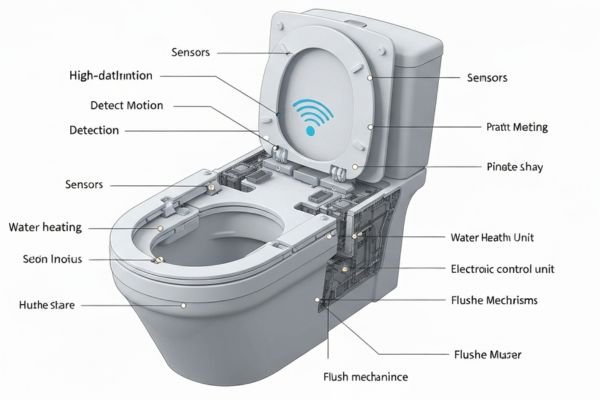
The sophisticated functionality of a smart toilet starts with its internal electronic components. The “brain” is the Printed Circuit Board (PCB), which contains the Micro-Controller Unit (MCU). This MCU is responsible for processing signals from various sensors, including temperature, water level, and human body sensors. The MCU then controls crucial functions like seat heating, nozzle movement, and air temperature adjustment. Because smart toilets rely heavily on these electronic systems, they require a dedicated electrical power supply for operation. The Power Board ensures that stable DC current is supplied to the control system and AC power is provided to demanding components like heaters and solenoid valves.
Touchless Operation: How Do Smart Toilets Work to Prevent Germ Spread?
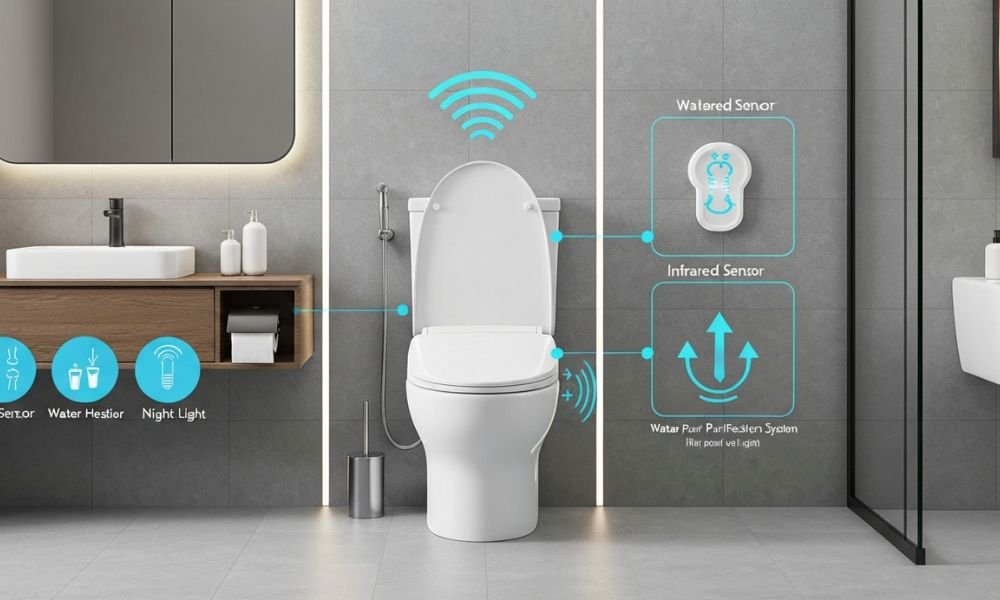
A fundamental answer to how do smart toilets work is through minimizing physical contact, which drastically improves hygiene. Motion sensors, typically infrared sensors, detect when a user approaches or leaves the toilet. This automation triggers the automatic opening and closing of the lid. Crucially, the sensors enable automatic flushing after use. Eliminating the need to touch unsanitary surfaces reduces bacteria and germ spread. Furthermore, this system ensures flushing happens reliably every time, which is convenient for users with mobility limitations or for preventing accidental neglect. Control over customized settings is often managed via a remote or touchpad, maintaining the hands-free focus.
Next-Level Cleansing: Bidet Functionality and Water Systems
How do smart toilets work to achieve superior hygiene? They utilize a built-in bidet system that employs a dedicated water line. This system cleanses the user with a targeted water stream, which provides superior results compared to traditional toilet paper. The water is often filtered and heated for optimal comfort. Users have complete control to adjust the water temperature, pressure, and the nozzle’s position. After the bidet wash, an integrated air dryer provides a hands-free drying solution. This feature not only enhances convenience but also makes the system significantly more eco-friendly by reducing toilet paper waste.
Customized Comfort: Heated Seats and Lighting Features
Comfort features are integral to the design, detailing how do smart toilets work to elevate user experience. The heated seat is a highly sought-after function. Featuring adjustable settings that prevent “chilly surprises” on cold Canadian mornings. The seat temperature is easily customizable to suit individual preferences. Many smart toilets also incorporate soft LED night lights. This illumination aids safe navigation in the dark without requiring harsh overhead lights, thereby reducing disruption to sleep patterns. Advanced models can even save specific user preferences—such as seat temperature and water pressure—via memory settings, enhancing luxury in shared bathrooms.
Sanitation Maintenance: How Do Smart Toilets Work to Clean Themselves?
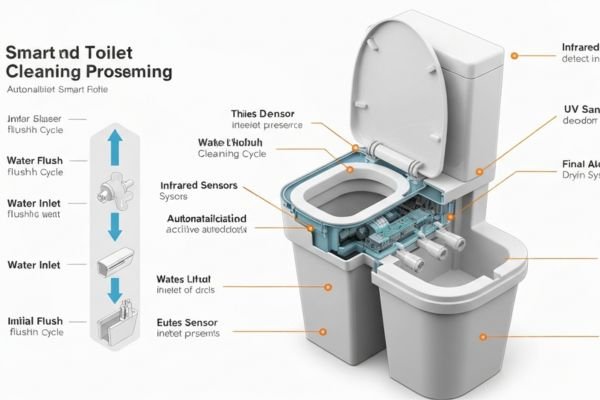
Smart toilets are meticulously designed to minimize required manual cleaning by incorporating automated sanitization systems. The self-cleaning mechanism frequently includes automatic bidet nozzle cleaning after each use. More advanced systems utilize UV sterilization or electrolyzed water rinses to sanitize the bowl and nozzle, ensuring continuous hygiene. Furthermore, built-in deodorizers help maintain a fresh environment. These systems typically use active carbon filters or air purifiers to actively neutralize unwanted odors immediately following use. This comprehensive, automated sanitation process significantly reduces the need for harsh chemical cleaners and manual effort.
Water Efficiency and Flushing Mechanisms
An important function of how do smart toilets work is their commitment to water conservation. Many modern smart toilets utilize dual flush technology, offering a choice between a low-volume flush (as low as 1 gallon) for liquid waste and a higher volume flush (up to 1.6 gallons) for solid waste. This selectivity optimizes water usage and results in substantial long-term savings on utility bills compared to older, less efficient fixtures. Strong flushing performance is often achieved through siphon action. Where the speed and volume of the water create a powerful vacuum effect to remove waste and prevent clogs. The water seal, created by water held in the “S” bend, also plays a crucial role in preventing sewer gases from entering the room.
Advanced Diagnostics: How Do Smart Toilets Work as Health Guards?
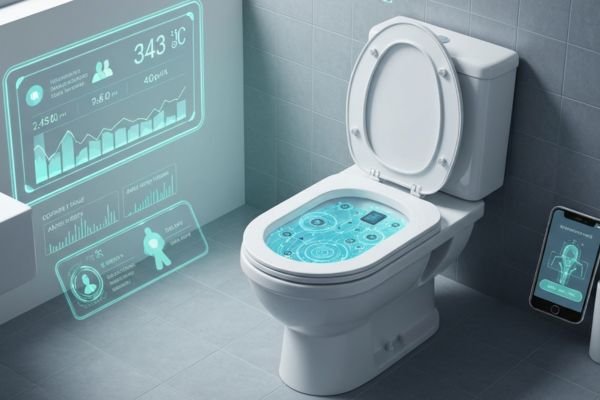
The cutting edge of how do smart toilets work involves their new role as passive health monitoring devices. These high-end fixtures are equipped with specialized health tracking sensors. The sensors analyze urine and stool composition for key biomarkers, providing real-time insights into hydration, glucose levels, or potential signs of infection. This critical health data can then be securely transmitted to a connected mobile application for effortless tracking. This capacity transforms the smart toilet into a functional “health guard” within the home, supporting proactive wellness, particularly for vulnerable or elderly users. To explore this concept further, check out what smart toilets do for additional insights.
Installation and Maintenance Considerations
To understand how do smart toilets work in practice, homeowners must recognize the installation requirements. Since these devices are electronic, they absolutely require a nearby electrical outlet to power all functions. Installation difficulty varies by model: floor-standing units (like the ST22 Sesto) are generally easier to install, but wall-mounted models (like the Lafeme Autolux) often require specialized plumbing and cistern integration. Professional installation is frequently recommended to ensure compliance and safety. For maintenance, users should clean surfaces using mild soap and a soft cloth, carefully avoiding harsh chemicals that could damage the sensitive internal sensors and electronic parts. The internal water filter also requires regular replacement to ensure the bidet water remains clean.
Conclusion
In essence, how do smart toilets work involves an intricate system of sensors and electronics that automate nearly every aspect of the bathroom experience. They deliver unparalleled hygiene through self-sanitizing bidets and touchless flushing. They provide exceptional comfort via heated seats and personalized settings. Finally, they champion efficiency by maximizing water conservation with dual flush systems and eliminating the need for toilet paper. While the initial purchase price is higher, the long-term benefits in convenience, cleanliness, and potentially even passive health monitoring solidify the smart toilet as a practical and worthwhile investment for the modern, future-ready home.